
Precision CNC Machining Partner
17-4 PH Milling Services (AISI 630)
AXALLOY is a Shenzhen-based CNC machining partner specializing in precision machining for difficult alloys, including 17-4 PH precipitation-hardening stainless steel. We support international engineering, procurement, and quality teams from prototype development through low-volume and repeat production, with a strong focus on manufacturability, process control, and documentation.
If your 17-4 PH parts have tight geometric tolerances, critical interfaces, thin walls, complex pockets, or demanding surface finish requirements, we build a stable machining route and verify it with inspection evidence.
Why 17-4 PH (and Why Milling It Needs Control)
17-4 PH is widely used for high-strength, corrosion-resistant components in aerospace, energy, medical, semiconductor equipment, robotics, and precision industrial systems. It can be challenging when designs include:
- Tight positional relationships between features (multi-side machining)
- Thin walls and long reaches (risk of distortion and chatter)
- Threads, small holes, and precise bores in hardened or heat-treated condition
- Surface finish requirements on sealing or interface faces
Our approach: we review material behavior, geometry, tolerances, surface requirements, inspection strategy, and production volume first—then define the machining and inspection plan.
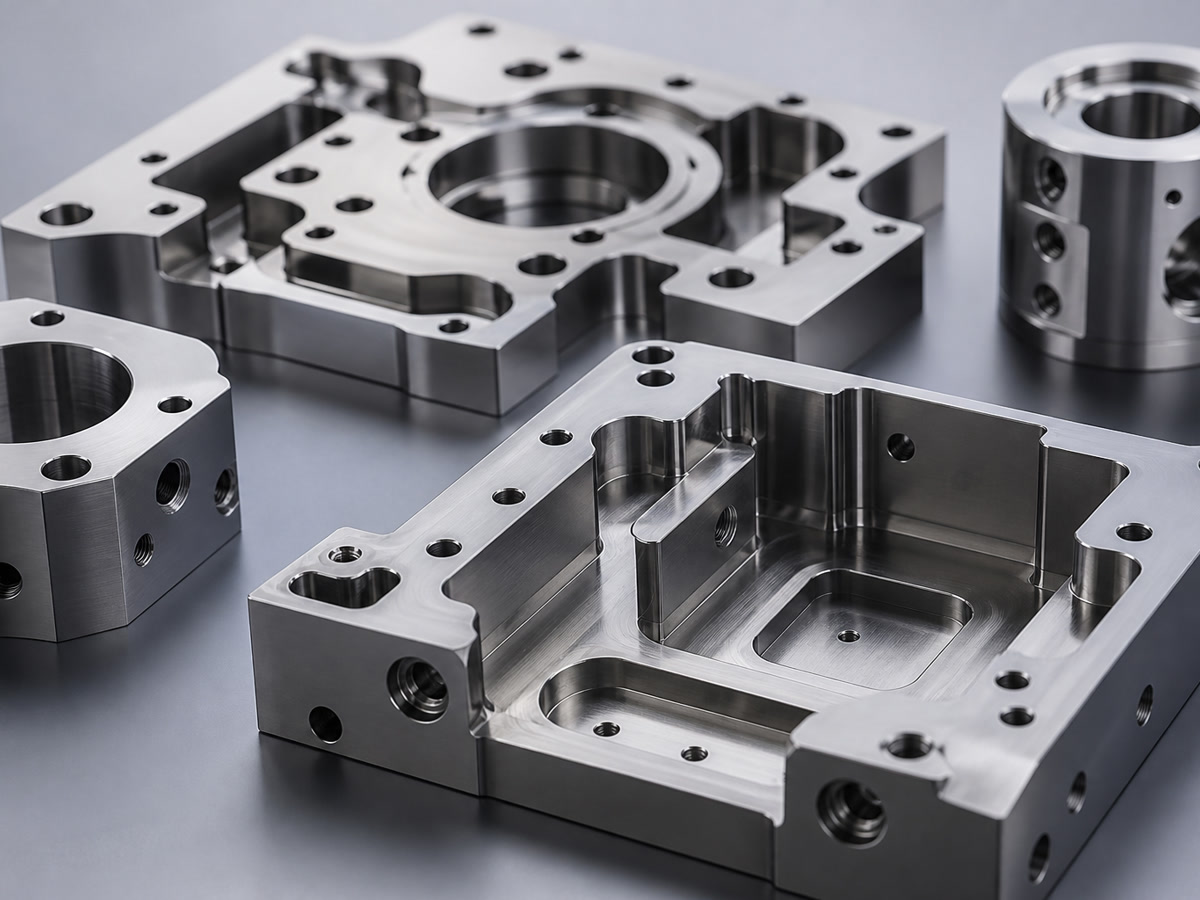
17-4 PH CNC Milling Capabilities
Multi-axis milling for complex 17-4 PH components including housings, brackets, manifolds, plates, and complex structural components with controlled feature relationships.
Standard Machining Capability
Standard dimensional tolerance
±0.010 mm
Precision dimensional tolerance
±0.005 mm
Standard angular tolerance
±0.5°
Precision angular tolerance
±0.1°
Position tolerance
down to 0.010 mm
Flatness
down to 0.005 mm
Minimum wall thickness
0.5 mm
Minimum hole diameter
Ø0.5 mm
Minimum thread size
M1.0
Surface finish
Ra 1.6 μm standard
Precision machined finish
Ra 0.8 μm
Grinding available
down to Ra 0.2 μm
CNC Milling Equipment Capability
Max 3-axis part size
1,000 × 600 × 600 mm
Max 4-axis part size
Ø500 × 800 mm
Max 5-axis part size
Ø500 × 400 mm
Positioning accuracy
±0.005 mm
Repeatability
±0.003 mm
Min internal corner radius
R0.3 mm
Spindle speed
up to 20,000 rpm
Tool magazine
up to 60 tools
Supported operations: facing, contouring, pocketing, drilling, tapping, boring, thread milling
3-Axis Milling
Ideal for prismatic parts, plates, and components with features on a single plane or simple multi-plane geometry.
4-Axis Milling
Rotary indexing enables machining on multiple faces in one setup, improving positional accuracy between features.
5-Axis Milling
Simultaneous or positional 5-axis machining for complex contours, undercuts, and reduced setup variation.
Prototype to Production for 17-4 PH Parts
We support programs where the total cost of risk matters more than the lowest unit price.
1–20
Prototype pcs
20–500
Low-volume pcs
500–10K+
Batch pcs
1
MOQ (part)
5–10
Prototype lead days
10–20
Standard lead days
Expedited service available. MOQ from 1 part.
Typical 17-4 PH Milled Part Applications
- Aerospace and flight hardware fixtures, brackets, and precision interfaces
- Semiconductor equipment frames, precision plates, and vacuum-compatible assemblies
- Energy / oil & gas: valve components, retainers, structural mounts
- Robotics and automation: precision structural parts, mounts, actuator components
- Medical device equipment components (non-implant unless specified and approved)
Secondary Processes for 17-4 PH Programs
To help customers consolidate suppliers and reduce setup variation, we can support additional processes beyond milling.
EDM
Wire / sinker EDM for sharp internal features or difficult geometries that cannot be milled.
Precision Grinding
For tight flatness/roundness requirements and fine surface finishes down to Ra 0.2 μm.
Heat Treatment
Coordination of heat treatment as specified by your drawing requirements.
Passivation & Coating
Surface treatments applied as required for corrosion resistance or functional performance.
Deburring & Cleaning
Complete edge conditioning and precision cleaning before delivery.
Marking & Assembly
Part marking for traceability and light assembly support to consolidate suppliers.
Note: final feasibility depends on your drawing requirements, heat-treat condition, and inspection plan.
Inspection, Traceability & Quality Documentation
AXALLOY is built for customers who need evidence, not assumptions—especially when transferring parts from an unreliable supplier.
Inspection Capability
First Article Inspection (FAI), in-process inspection, and final inspection available.
Documentation Available
- ✓ Material Test Report (MTR) / Mill Test Certificate
- ✓ Certificate of Conformance (CoC)
- ✓ First Article Inspection Report
- ✓ Ballooned drawing + full dimensional report
- ✓ Surface roughness report (when required)
- ✓ Heat treatment certificate / coating certificate (when applicable)
- ✓ Lot traceability and special process records
- ✓ Inspection photos upon request
Engineering Support (DFM for 17-4 PH Milling)
Before quoting and during ramp-up, we support:
- › Drawing review and DFM feedback
- › Tolerance review and critical feature identification
- › Fixture planning and process development to reduce distortion and variation
- › Setup reduction strategies using multi-axis milling
If you have thin walls, tight GD&T, or multiple datums controlling functional interfaces, share the assembly intent—our feedback will focus on manufacturability and inspection clarity.
File Formats We Support
3D CAD
STEP/STP, IGES/IGS, X_T, X_B, SLDPRT, SAT
2D Drawings
PDF, DWG, DXF
Images
JPG, PNG, TIFF
Compressed
ZIP, RAR
Our Commitment
AXALLOY supports high-value 17-4 PH milling projects where dependable communication, stable process control, and export-ready documentation are required.
Request a Quote for 17-4 PH Milling
For the fastest, most accurate quote, please provide the following information:
- 1 2D drawing (PDF) with GD&T and critical features
- 2 3D model (STEP preferred)
- 3 Material specification (17-4 PH condition if defined)
- 4 Quantity (prototype, low-volume, or repeat batch)
- 5 Surface finish and any special processes (passivation/coating/heat treat)
- 6 Documentation requirements (FAI, full dimensional, traceability)
- 7 Target delivery date and shipping destination